
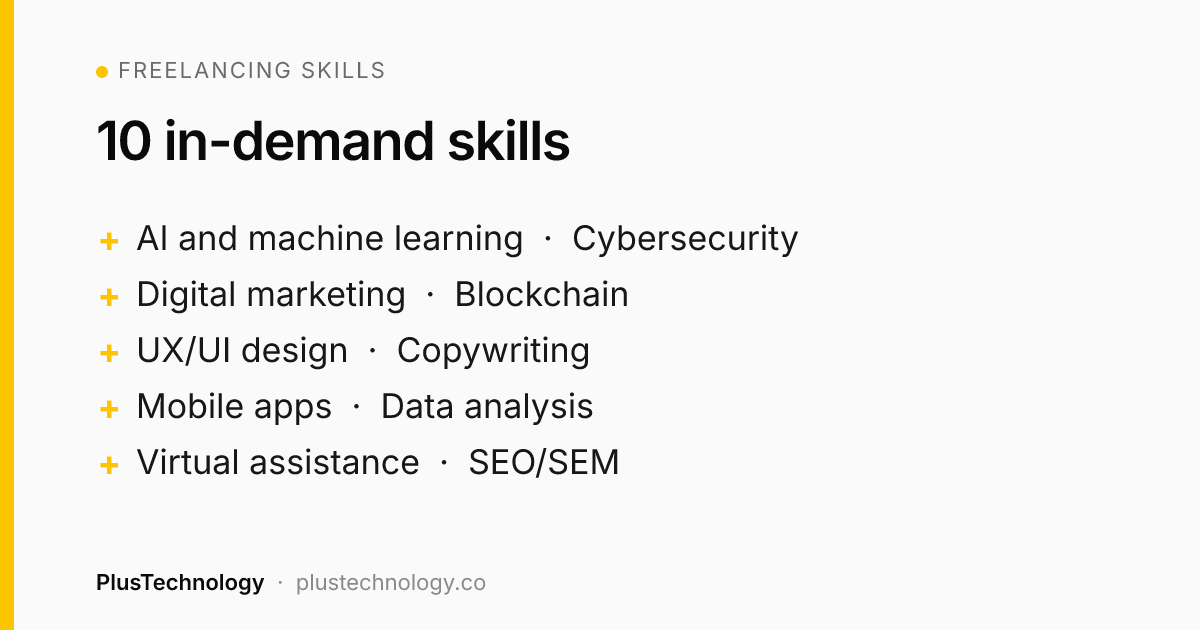
The most in-demand freelancing skills are AI and machine learning (including AI automation), cybersecurity, digital marketing, blockchain development, UX/UI design, content and copywriting, mobile app development, data analysis, virtual assistance and SEO/SEM. Pick one, build two or three portfolio projects, then specialise in a niche.
Why freelancing skills matter more than ever
Freelancing is no longer just a side hustle; it’s a full career for millions of people. As more people join the gig economy, the freelancers who win are the ones whose skills match what clients are actively hiring for. This guide, first published in 2024 and updated for 2026, covers ten in-demand freelancing skills and practical ways to start.
Top 10 in-demand freelancing skills
1. AI and machine learning
AI isn’t just for tech giants. From chatbots to automated workflows, businesses want help using AI well. A common project is automating customer-service FAQs with a chatbot so staff can focus on complex issues.
Tip: learn Python and the OpenAI or Claude APIs, and build a small chatbot or automation to show clients. See our guide to AI automation for small business for project ideas.
2. Cybersecurity
With digital threats rising, small businesses need affordable, project-based security help: audits, two-factor authentication and safer configurations.
Tip: certifications like CompTIA Security+ add credibility. Offering a few small audits builds experience and a portfolio.
3. Digital marketing
Social media, email campaigns and paid ads remain core freelancing skills because every brand needs to grow online. Specialising, for example in Instagram marketing for wellness brands, builds authority quickly.
Tip: master one platform first and build sample campaigns or help a local business improve its reach.
4. Blockchain development
Beyond cryptocurrency, blockchain powers decentralised apps and smart contracts. Start with Solidity and simple contracts, and document your projects on GitHub.
5. UX/UI design
User experience drives online success, so designers who make products easier to use are always needed. Redesigning a confusing interface can noticeably improve user retention.
Tip: learn Figma and design a few real or mock projects for your portfolio.
6. Content creation and copywriting
Brands need blogs, social content and marketing copy. Writers who specialise in a niche and write in a relatable, story-driven way stand out.
Tip: publish samples on Medium or LinkedIn in the niche you want to work in.
7. Mobile app development
Mobile use keeps growing, so businesses want apps that reach customers on their phones. Start with a simple app like a to-do list, then move to client projects.
8. Data analysis
Data analysts help businesses understand customers and trends, for example by analysing buying habits to improve marketing. Practise with public datasets on Kaggle and build sample reports in Excel or Tableau.
9. Virtual assistance
Virtual assistants handle inbox management, scheduling and customer service remotely. Tools like Asana and Trello help you stay organised as you add clients.
10. SEO and SEM
Every business wants to rank higher on Google. Even simple local SEO, such as better meta descriptions and an optimised Google Business Profile, can bring more customers.
Tip: learn Google Analytics and Search Console, offer an initial audit, and turn the results into a case study.
What changed for freelancing skills since 2024
The biggest shift is AI. Clients now expect freelancers to use AI tools to work faster, and many want help adding AI to their own business, which has created strong demand for AI automation, chatbots and integrations with tools like n8n, Make and Zapier. Skills that combine a core craft (development, marketing, design) with practical AI use are the most valuable in 2026.
Practical tips for developing freelancing skills
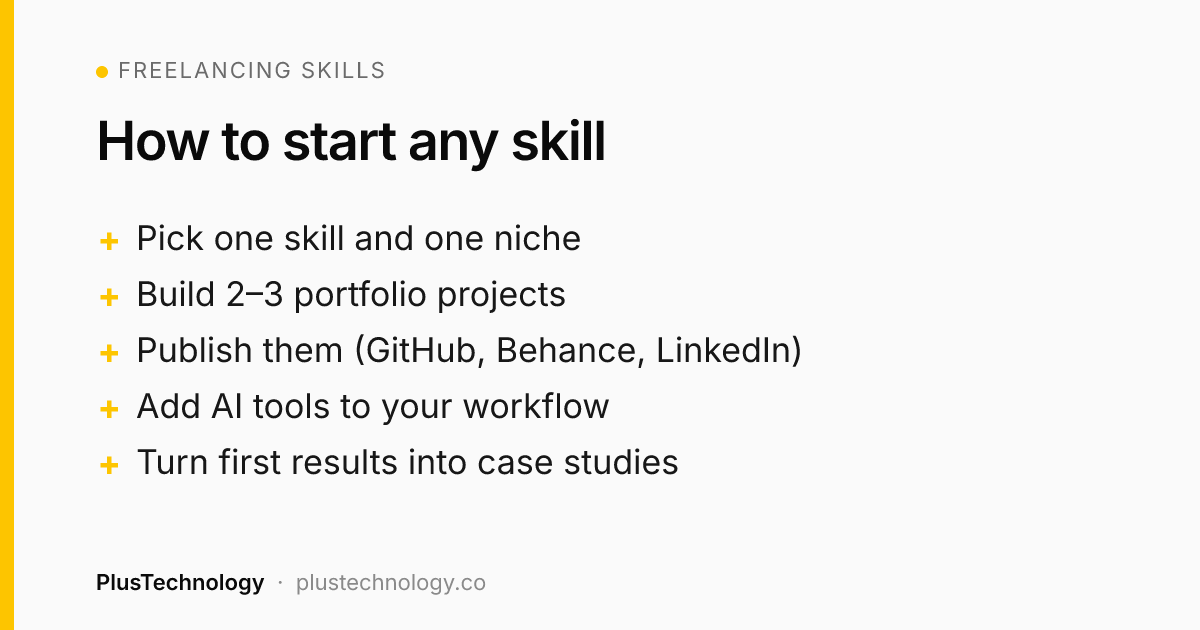
- Focus on one skill at a time. Spreading yourself too thin leads to burnout.
- Show your work. Document projects, even practice ones, and share them online.
- Learn from other freelancers. Join LinkedIn or Reddit communities to stay current.
Final thoughts
The freelancing skills that pay best are the ones you combine with real results. Whether you choose AI, UX design or digital marketing, consistency is key: every skill you learn and every project you finish strengthens your portfolio.
Freelancing skills: frequently asked questions
Which freelancing skills are most in demand in 2026?
AI and automation, cybersecurity, digital marketing, UX/UI design, content and copywriting, app development, data analysis, virtual assistance, SEO and blockchain development.
What is the easiest freelancing skill to start with?
Virtual assistance, content writing and social media management have the lowest barriers to entry, though specialising quickly helps you earn more.
How long does it take to learn a freelancing skill?
Enough to land first clients usually takes a few months of focused practice and two or three solid portfolio projects.
Need help with this? PlusTechnology offers AI automation for businesses worldwide. Hire us on Upwork or get in touch.